Barrow crossings are designated crossing points found at some railway stations where staff and sometimes even...

Cart 0 Product Products (empty)
No products
Free shipping! Shipping
£ 0.00 Total
Product successfully added to your shopping cart
Quantity
Total
There are 0 items in your cart. There is 1 item in your cart.
Total products (tax incl.)
Total shipping (tax excl.) Free shipping!
Total (tax incl.)
Search Tips
Tips categories
Latest Tips
-
 What is a barrow crossing?Read more
 -
 What colour are railway rails?Read more
In the early days, railway tracks were made from iron, but cast iron was considered to be too brittle and wrought...
-
 What is a preserved railway?Read more
A preserved railway, also known as a heritage railway, is a railway line that has been restored and maintained for...
-
 What is a superglue activator?Read more
A superglue activator, also known as a cyanoacrylate (CA) accelerator, is a chemical agent designed to speed up the...
-
 What is the difference between static grass and fine scatter?Read more
Static grass and fine scatter are both commonly used in scale modelling and model railway projects to create...

How do I test the width between the wheels of my engines?
The best way to check the wheels of your locomotives is to use a tool called a back to back gauge.
They are available for all scales/gauges. They are made of brass and you simply slide it over the axle and the back of the wheels.
If it proves difficult to get your gauge over the axle and between the wheels, the gap is too tight, then the wheels are too close together, so the axle will need removing from the chassis to enable you to pull the wheels apart slightly to allow the back to back gauge.
If the gauge does not touch both wheels, the wheels are too far apart and need to be squeezed back together.
Hopefully one of these in your tool kit will give you many years of perfect rolling and stop those annoying derailments.
Click here to receive the tips weekly in your mailbox. You can unsubscribe at any time.
Related products
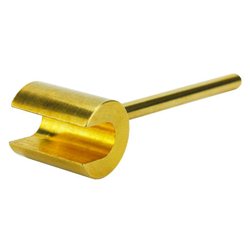
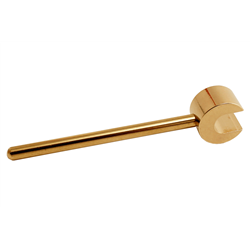
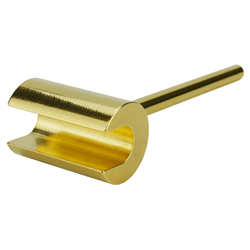
Back to Back Gauge P4 17.75mm
Price: £ 5.00Back to Back P4 Scale 17.75mm Brass back-to-back gauge for modellers using P4...
Related posts
-
 Do I need a respirator?If you are using an aerosol spray paint you should always use one. Always read the manufacturer’s...
 - How to remove super glue (cyanoacrylate)?Cyanoacrylate is best known as super glue. The best way to remove it is with acetone or an acetone-based product...
- What is the best wood for baseboards?The most common wood for baseboards is probably chipboard as this is relatively inexpensive. Plywood is another...
- How do I stick parts together for a test fit?There are several trains of thought on the best way to secure parts together temporarily. Some suggest using a small...
- How to clean model railways track?There is of course the old tried and tested method, the track rubber which does the job, no railway modeller should...