Catenary systems are used to provide an overhead power supply for electric trains. They consist of a series of wires,...

Cart 0 Product Products (empty)
No products
Free shipping! Shipping
£ 0.00 Total
Product successfully added to your shopping cart
Quantity
Total
There are 0 items in your cart. There is 1 item in your cart.
Total products (tax incl.)
Total shipping (tax excl.) Free shipping!
Total (tax incl.)
Search Tips
Tips categories
Latest Tips
-
 How do catenary systems cope with curved sections of track ?Read more
 -
 Why does my railway analogue controller keep cutting out?Read more
There are a few reasons why your analogue controller could be cutting out, but the most probable cause is a short...
-
 What are the common railway scales?Read more
There are three common model railway scales, these being N Gauge, OO Gauge and G scale; although there are several...
-
 How can I best clean my brushes after using enamel-based paints?Read more
Cleaning brushes after using enamel-based paints can be a bit trickier than cleaning them after using water-based...
-
 Are electrofrog points better than insulfrog points?Read more
Using electrofrog points on a layout will undoubtedly result in improved reliability for the locomotives that...

What tool is good for removing accumulated paint from an airbrush?
Like many painting tools, airbrushes will periodically need a deep clean in order to remove persistent and ingrained paint deposits. Purpose-made brush cleaners can be very useful for this but can be expensive and don't necessarily always have the longevity for repeated use.
Luckily there is a simple alternative that is robust and offers a practical and cheap solution, namely dental brushes. Ideally configured for cleaning those small awkward to get to places, dental brushes offer a practical cleaning solution that is effective and robust. The bristles are strong and well-secured, so they will stand up to repeated use. Additionally, as they are available in different sizes and multipacks they offer a relatively cheap and long-lasting solution to cleaning an airbrush. Used in combination with cleaning fluids they can be highly effective at removing ingrained or accumulated paint deposits which would otherwise be awkward to get to.
Posted in: Painting
Click here to receive the tips weekly in your mailbox. You can unsubscribe at any time.
Related products
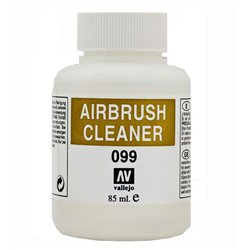
Model Air - Airbrush Cleaner 85ml
Price: £ 3.99Model Air - Airbrush Cleaner 85mlDeveloped especially for airbrush...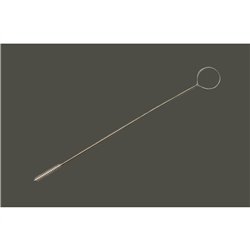
Tamiya Airbrush Cleaning Brush (Extra Fine)
Price: £ 5.99Spray-Work Airbrush Cleaning Brush (Extra Fine). The soft short bristles of...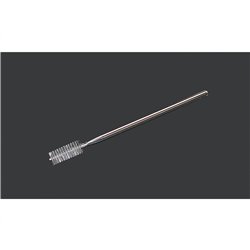
Related posts
-
 Do I need to use a primer?For best results it is advisable to use a primer as this will stick to the plastic and give a uniform coat of paint...
 - What is weathering?Weathering is a painting technique used by modellers to create the appearance of dirt and grime and even damage to...
- How do I clean brushes used with enamel paint?Enamel paint is solvent based, so trying to wash in water will not work, you need to use white spirit. It is...
- How do I fill holes in a model?There are many products on the market for filling holes: There are plastic putties straight out of the tube, there...
- What is the best size paintbrush?This would depend on what you are painting as paint brushes come in various shapes and sizes. I would say for...