When gluing parts, it is best to hold them in place especially if it is a large area you need to join together, such...

Cart 0 Product Products (empty)
No products
Free shipping! Shipping
£ 0.00 Total
Product successfully added to your shopping cart
Quantity
Total
There are 0 items in your cart. There is 1 item in your cart.
Total products (tax incl.)
Total shipping (tax excl.) Free shipping!
Total (tax incl.)
Search Tips
Tips categories
Latest Tips
-
 How can I keep parts in place during gluing?Read more
 -
 What was the Bachmann 'Blue Riband' subbrand ?Read more
The Blue Riband subbrand was a significant step in the evolution of Bachmann Branchline, the UK division of Bachmann...
-
 What is a Weekend Edition model plane kit?Read more
'Weekend Edition' plastic model plane kits are a type of kit offered by plastic kit manufacturer Eduard alongside...
-
 What is a good age for a child's first layout?Read more
Several factors will influence the age at which your child is ready for their first layout. These include the...
-
 What is the best wood for baseboards?Read more
The most common wood for baseboards is probably chipboard as this is relatively inexpensive. Plywood is another...

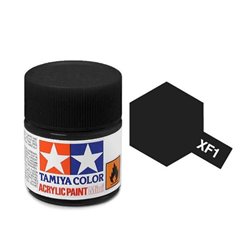
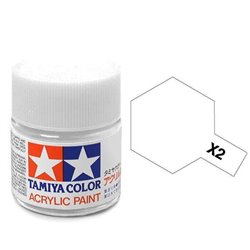
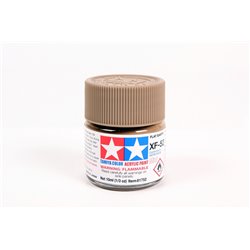
What is the difference between X and XF in the Tamiya paint range?
Tamiya produces a wide variety of paints for different purposes and each is identified by a unique prefix. For the majority of projects, modellers will generally use 10ml bottled Tamiya paints which fall into one of three categories: LP, X or XF.
Paints with the prefix LP are Lacquer-based and can either be airbrushed or brush painted depending on the needs of the modeller. When thinning or cleaning these paints it is important to note that LP paints will require a specific lacquer-based thinner. Tamiya has produced a specific Lacquer thinner for this purpose.
Paints with the X and XF prefixes are acrylic based. The X Range is specifically designed to give a gloss finish, whereas the XF range will give a flat or matt finish. Similar to the LP range, both X and XF paints can be either brush or airbrush painted. As both the X and XF ranges are acrylic based they will require an acrylic-based thinner. Tamiya has produced the X-20A acrylic thinner specifically for that purpose.
In addition to those ranges mentioned above Tamiya has also produced the AS lacquer-based range, specifically designed for large-size aircraft models. Similarly, the PC range of paints has been specifically designed for use on polycarbonate bodies of R/C car models. Both the AS and PC ranges are available in 100 ml spray cans.
Posted in: Painting
Click here to receive the tips weekly in your mailbox. You can unsubscribe at any time.
Related products
Related posts
-
 Do I need to use a primer?For best results it is advisable to use a primer as this will stick to the plastic and give a uniform coat of paint...
 - What is weathering?Weathering is a painting technique used by modellers to create the appearance of dirt and grime and even damage to...
- How do I clean brushes used with enamel paint?Enamel paint is solvent based, so trying to wash in water will not work, you need to use white spirit. It is...
- How do I fill holes in a model?There are many products on the market for filling holes: There are plastic putties straight out of the tube, there...
- What is the best size paintbrush?This would depend on what you are painting as paint brushes come in various shapes and sizes. I would say for...