Bogie Sulphate Wagons were, at the time, famed for being the largest open wagons of their type, but their demise was...

Cart 0 Product Products (empty)
No products
Free shipping! Shipping
£ 0.00 Total
Product successfully added to your shopping cart
Quantity
Total
There are 0 items in your cart. There is 1 item in your cart.
Total products (tax incl.)
Total shipping (tax excl.) Free shipping!
Total (tax incl.)
Search Tips
Tips categories
Latest Tips
-
 What is a bogie sulphate wagon?Read more
 -
 What is the best way to glue a cardboard building kit?Read more
The best way to glue a cardboard kit like Metcalfe or Superquick is to read and follow the instructions that are...
-
 How do I get started with weathering a plane?Read more
Weathering a plane is a fantastic way to add realism and character to your aircraft. It involves replicating the...
-
 What is the HOm scale?Read more
The HOm scale is a popular narrow-gauge modelling scale used by enthusiasts to represent railways that are smaller...
-
 What kind of solder should I use on white metal kits?Read more
If you are soldering a white-metal kit together, you will need to use a lower temperature setting on your soldering...

How do you cut model ship rigging?
To some extent, how you cut model ship rigging will depend on a number of issues including the material that is used for the rigging, the scale and the historical time period of the model.
Ship models representing vessels from the 'Age of Sail' are frequently referred to as period ships. The rigging arrangements for these vessels are often very elaborate and as such modellers will wish to work with a very forgiving material. To that end, many modellers will choose to use a specific rigging thread often produced by the kit manufacturers themselves. These are often cotton or polyester and have the specific advantage that they are often wax treated which reduces the likelihood of the material splaying or burring when worked. When creating ratlines, many modellers may opt to use a rigging jig. This helps keep the tension of the ratlines whilst allowing the modeller to easily tie knots. There are advantages of using snips in this case as they offer great precision and control when working in a tight space and will offer a clean cut that will reduce the likelihood of burrs and splaying of the rope.
Due to issues of scale or a particular colour, some modellers may opt to use a non-waxed cord. This has a higher likelihood of fraying or burring, and as such, one of the best options for cutting are modelling snips as they will offer the cleanest cut. Additionally, it may be advantageous to seal the ends of the cord with a small amount of cyanoacrylate or PVA glue to prevent fraying or burring.
Most cords are between 0.25 and 1 mm in diameter and may not be the correct scale for modellers working with injection-moulded plastic kits. One potential option, in this case, would be nylon. The high tension of nylon thread can make it difficult to take tight turns and to knot but it has the advantage of maintaining its tension over a very long time if it is correctly rigged. As such, it may lend itself very well to certain scales. Its high tension also ensures that fraying and burring are far less likely than cotton and polyester threads and as such can be cut easily with the use of a sharp hobby knife and a cutting mat.
Posted in: Best practices
Click here to receive the tips weekly in your mailbox. You can unsubscribe at any time.
Related products
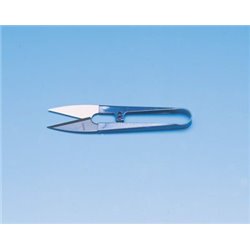
Microsnips for cutting thread
Price: £ 3.50A pair of microsnips specially designed for cutting thread.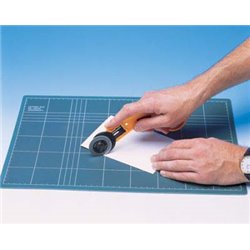
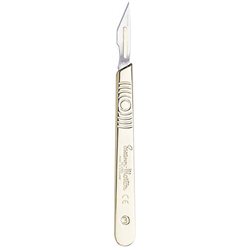
Professionnal scalpel No 3
Price: £ 12.25This handle is available for use with the small (No.3) fitment blades.
Related posts
-
 Do I need a respirator?If you are using an aerosol spray paint you should always use one. Always read the manufacturer’s...
 - How to remove super glue (cyanoacrylate)?Cyanoacrylate is best known as super glue. The best way to remove it is with acetone or an acetone-based product...
- What is the best wood for baseboards?The most common wood for baseboards is probably chipboard as this is relatively inexpensive. Plywood is another...
- How do I stick parts together for a test fit?There are several trains of thought on the best way to secure parts together temporarily. Some suggest using a small...
- How to clean model railways track?There is of course the old tried and tested method, the track rubber which does the job, no railway modeller should...