That would very much depend on what it is you are trying to glue the balsa wood to, if you are gluing it to another...

Cart 0 Product Products (empty)
No products
Free shipping! Shipping
£ 0.00 Total
Product successfully added to your shopping cart
Quantity
Total
There are 0 items in your cart. There is 1 item in your cart.
Total products (tax incl.)
Total shipping (tax excl.) Free shipping!
Total (tax incl.)
Search Tips
Tips categories
Latest Tips
-
 How do I glue balsa wood?Read more
 -
 What is an A1A-A1A wheel arrangement?Read more
In the UK, an A1A-A1A wheel arrangement was used on some early designs of diesel railway locomotives, most notably...
-
 How to fit drivers in locomotivesRead more
Installing a driver or fireman into your locomotive can really bring it to life and add realism. After all, in real...
-
 Do cambers help model trains traverse a bend?Read more
In real life, railway tracks tilt slightly as they negotiate curves. The tilt is known by many names, including a...
-
 Is modelling in N gauge cheaper than OO gauge?Read more
Although N gauge is very popular (and for good reason), it can't be denied that the most popular gauge on the UK...

In railways, what does MGR stand for?
The term MGR stands for 'merry-go-round' which is used to describe the use of a specific hopper wagon designed to carry large amounts of loose bulk commodities such as coal, aggregates and grain.
The MGR system was introduced in the early 1960s after the 'Reshaping of the British Railways' as detailed by Dr. Beeching. The great advantage of the system lay in its ability to deliver large amounts of resources quickly to a specific destination, such as a coal-fired power station. Previously wagons delivering coal to a power station had to be individually shunted and unloaded in order to deliver their cargoes, this was a time-consuming and inefficient process.
The MGR system utilised specific hopper wagons that could be automatically loaded and unloaded. A locomotive fitted with slow speed control could deliver a number of wagons on a continuous loop from colliery to power station delivering coal, hence the adoption of the term MGR to describe this 'merry-go-round' process. The reduction in time and manpower made for a very efficient system with obvious cost savings. It has been estimated that under the MGR system, each hopper could deliver up to 14 times as much coal as a wagon operated under the previous manual system.
Posted in: Model Railway
Click here to receive the tips weekly in your mailbox. You can unsubscribe at any time.
Related products
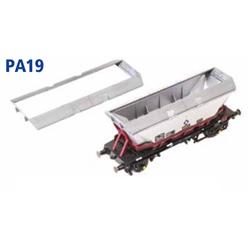
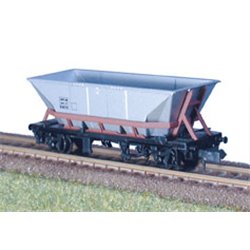
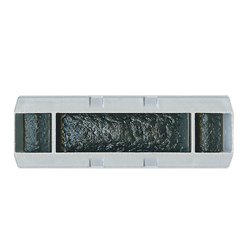
2 Coal Loads and 2 Canopies (For MGR Hopper...
Price: £ 5.002 Coal Loads and 2 Canopies (For MGR Hopper Wagons)Accessory suitable for...
Related posts
-
 What scale is Hornby?Hornby model railways are OO Scale or 1/76th that is 4 millimetres to the foot (12 inches). It runs on a track with...
 - How to weight my model so it does not tip?For wargaming figures, a small coin or washer glued to the under side of the base will usually to do the job. This...
- Is Bachmann compatible with Hornby?Yes, any OO scale loco, wagon or coach will work on any OO scale track, regardless of brand. Couplings are also...
- What are the model railway eras?According to Bachmann, as it states in their catalogue there are 9 eras. As they say in their catalogue this is not...
- Can a "DCC ready" train be used on analogue?Yes, you can use a DCC ready train on your analogue layout. DCC ready just means that the train has been factory...