That would very much depend on what it is you are trying to glue the balsa wood to, if you are gluing it to another...

Cart 0 Product Products (empty)
No products
Free shipping! Shipping
£ 0.00 Total
Product successfully added to your shopping cart
Quantity
Total
There are 0 items in your cart. There is 1 item in your cart.
Total products (tax incl.)
Total shipping (tax excl.) Free shipping!
Total (tax incl.)
Search Tips
Tips categories
Latest Tips
-
 How do I glue balsa wood?Read more
 -
 What is an A1A-A1A wheel arrangement?Read more
In the UK, an A1A-A1A wheel arrangement was used on some early designs of diesel railway locomotives, most notably...
-
 How to fit drivers in locomotivesRead more
Installing a driver or fireman into your locomotive can really bring it to life and add realism. After all, in real...
-
 Do cambers help model trains traverse a bend?Read more
In real life, railway tracks tilt slightly as they negotiate curves. The tilt is known by many names, including a...
-
 Is modelling in N gauge cheaper than OO gauge?Read more
Although N gauge is very popular (and for good reason), it can't be denied that the most popular gauge on the UK...

What is a white metal kit?
White metals are bright metal alloys made to possess varying qualities depending on their intended use. Some white metals are particularly suited to being cast with fine details and are also highly polishable making them a perfect material to manufacture kits from.
Most white metal kits are presented in a similar way to the plastic, card or wooden ones: in the kit you will be supplied with pre-cut parts and instructions on how to assemble them, the main difference being in how you attach the parts together using either solder, epoxy resin or a mixture of the two.
White metal kits are a good choice for modellers who have their layouts in a location susceptible to moisture or extreme temperature as in these circumstances they will prove to be more durable, but for the more common bedroom layout, it's more a matter of choice with many conceding that the weight and texture of white metal kits do feel rather nice.
Posted in: Kit building
Click here to receive the tips weekly in your mailbox. You can unsubscribe at any time.
Related products
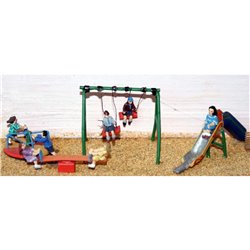
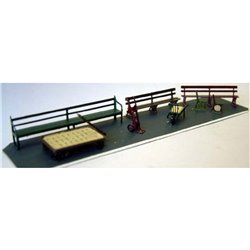
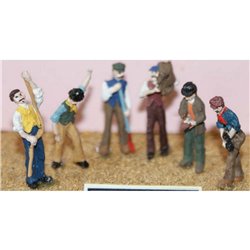
6 Working figures - set 1 (OO Scale 1/76th) -...
Price: £ 8.256 Working figures - set 1 (OO Scale 1/76th)
Related posts
-
 Do I need to wash my plastic kit?I personally wash all my plastic kits, I use warm soapy water (Washing up liquid) and a light rub over with a nail...
 - What is Milliput?Milliput is a two-part epoxy putty. There are two different colour rolls in a box when these are mixed together it...
- What modelling tools do I need to get started?Most modellers have an extensive tool kit, a tool for every eventuality. But when first starting a scalpel or a...
- How do I remove parts from the sprue?The short answer is carefully. The best way is with a sprue and plastic cutter but always be mindful of exactly...
- Do I need a cutting mat?It is not essential to have a cutting mat, but it is a good idea. It saves getting in trouble with your significant...