A pick and place tool is an aid for modellers, designed to handle small, intricate parts with precision and care. In...

Cart 0 Product Products (empty)
No products
Free shipping! Shipping
£ 0.00 Total
Product successfully added to your shopping cart
Quantity
Total
There are 0 items in your cart. There is 1 item in your cart.
Total products (tax incl.)
Total shipping (tax excl.) Free shipping!
Total (tax incl.)
Search Tips
Tips categories
Latest Tips
-
 What is a "pick and place tool"?Read more
 -
 What is a bolster wagon?Read more
A bolster wagon is a railway wagon designed to carry long items such as rails or posts.In appearance, bolster...
-
 What are Vacuform model kits ?Read more
Vacuform model kits (sometimes called vacform kits or simply vac kits) are a type of scale model kit that is made...
-
 What are BAA wagons?Read more
The BAA wagons were 40 feet long, mounted on BR-designed FBT6 bogies, similar to the widely successful Y25 type....
-
 What is the difference between single and double slip points?Read more
A single slip point has one moveable rail that can direct a train onto one of two possible tracks. The single movable...

What is a laser-cut kit?
A laser-cut kit is a regular kit that is put together the same way as any ordinary kit, and it's made from the same materials too (plastic, card or wood) but the difference is in how it's made.
Traditionally, kits have been manufactured by either using physical bladed tools to cut out the parts, pouring resin into a mould or by injecting/pressing plastic into a machine. Laser cutting doesn't do any of that, instead, it uses a very powerful laser beam to cut the parts out of a flat sheet of material.
Laser cutters can cut through plastic, card or even wood using laser beams varying in size and intensity, the advantage of this is a cleaner crisper cut. The beam can also be set to penetrate but not completely cut through the material making it easy for manufacturers to etch even the smallest of details onto a model. The laser beam is guided with precision by a computer program so although there is a great deal of human skill involved in the original design work for a model, the actual production is guaranteed to be to the highest standard and tolerances every time.
Laser-cut kits are becoming increasingly popular with serious modellers that desire greater detail. The choice of kits out there is becoming very interesting too because manufacturers now have greater flexibility in the number and kinds of kits that they can make available. So keep an eye out for some very interesting models next time you're in your local model shop!
Posted in: Kit building
Click here to receive the tips weekly in your mailbox. You can unsubscribe at any time.
Related products
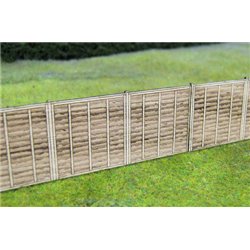
DISC**Laser Cut Kit - Wooden Fencing
Price: £ 7.50Beautiful Laser Cut wooden fencing designed to be situated in any N Scale...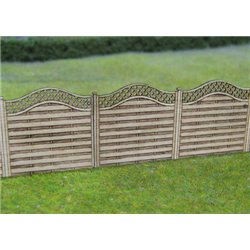
DISC**Wooden Fencing with Lattice Top Laser Cut...
Price: £ 7.00Wooden Fencing with Lattice Top Laser Cut Kit
Related posts
-
 Do I need to wash my plastic kit?I personally wash all my plastic kits, I use warm soapy water (Washing up liquid) and a light rub over with a nail...
 - What is Milliput?Milliput is a two-part epoxy putty. There are two different colour rolls in a box when these are mixed together it...
- What modelling tools do I need to get started?Most modellers have an extensive tool kit, a tool for every eventuality. But when first starting a scalpel or a...
- How do I remove parts from the sprue?The short answer is carefully. The best way is with a sprue and plastic cutter but always be mindful of exactly...
- Do I need a cutting mat?It is not essential to have a cutting mat, but it is a good idea. It saves getting in trouble with your significant...