When choosing a scale model, you'll be confronted with a huge range of scales to choose from, the most common...

Cart 0 Product Products (empty)
No products
Free shipping! Shipping
£ 0.00 Total
Product successfully added to your shopping cart
Quantity
Total
There are 0 items in your cart. There is 1 item in your cart.
Total products (tax incl.)
Total shipping (tax excl.) Free shipping!
Total (tax incl.)
Search Tips
Tips categories
Latest Tips
-
 In modelling, why are the scales used so random?Read more
 -
 How do I clean super glue (cyanoacrylate)?Read more
Fortunately these days there are special products to help you remove any little super glue (cyanoacrylate) mistakes...
-
 What is a loading gauge?Read more
Loading gauge is the maximum dimensions that a railway locomotive, coach or waggon (including its load) can be to...
-
 What are the pros and cons of using foam ballast inlay for my layout?Read more
Some of the potential pros of using foam ballast inlay for a model railway layout include:Easy to install:...
-
 What's the difference between DCC fitted, DCC onboard and DCC ready?Read more
There's no shortage of manufacturers producing models and components for DCC layouts these days, and that's a good...

How do I use pigments with my models?
Pigments are powdered colouring agents used for weathering and adding realistic effects to scale models.
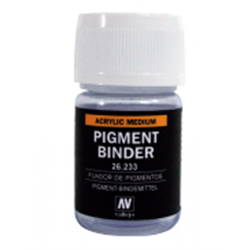
You can apply them in two main ways: dry over wet or dry paint, or mixed into a liquid binder. A binder is a medium that allows the pigment powder to adhere to the model's surface.
One technique is to dip your brush into an isopropanol-based binder solution sold by manufacturers, then rub it over a toothpick dipped in the pigment powder. This will transfer tiny amounts of the binder onto the powder, sealing it in place without making it run or wash away. However, it will leave a slightly lumpy texture, which can be ideal for replicating effects like rust or dried mud deposits.
Alternatively, you can apply the pigments in their dry, powdered form directly onto the model, then use a small amount of airbrush cleaner sprayed over the top. The airbrush cleaner will help fix the loose pigment particles in place without disturbing their dusty, weathered appearance.
No matter which method you use, always start with a small amount of pigment and build it up gradually for the most realistic finish. Different colours can be blended together as well. Take your time and experiment to achieve the desired effect.
Posted in: Painting
Click here to receive the tips weekly in your mailbox. You can unsubscribe at any time.
Related products
Related posts
-
 Do I need to use a primer?For best results it is advisable to use a primer as this will stick to the plastic and give a uniform coat of paint...
 - What is weathering?Weathering is a painting technique used by modellers to create the appearance of dirt and grime and even damage to...
- How do I clean brushes used with enamel paint?Enamel paint is solvent based, so trying to wash in water will not work, you need to use white spirit. It is...
- How do I fill holes in a model?There are many products on the market for filling holes: There are plastic putties straight out of the tube, there...
- What is the best size paintbrush?This would depend on what you are painting as paint brushes come in various shapes and sizes. I would say for...