Slips are often used in the real world on the approach to stations where space is limited but there is a necessity...

Cart 0 Product Products (empty)
No products
Free shipping! Shipping
£ 0.00 Total
Product successfully added to your shopping cart
Quantity
Total
There are 0 items in your cart. There is 1 item in your cart.
Total products (tax incl.)
Total shipping (tax excl.) Free shipping!
Total (tax incl.)
Search Tips
Tips categories
Latest Tips
-
 What is a slip?Read more
 -
 What is a locomotive headlamp?Read more
Lamps have been used on the front of railway locomotives since the mid-1800s. All through the steam years, the lamps...
-
 What is a train tail lamp?Read more
Tail lamps on trains have been around since the 1800s, originally powered by oil and later by batteries, they consist...
-
 What is the purpose of idler wheels on a tank?Read more
The purpose of idler wheels on a tank is to support the track and maintain its tension. Idler wheels are located at...
-
 When and where are sleeper built buffer stops used?Read more
Sleeper-built buffer stops, commonly used in railway systems, serve as an essential safety mechanism at the end of...

How can I keep parts in place during gluing?
When gluing parts, it is best to hold them in place especially if it is a large area you need to join together, such as the two parts of a fuselage of a model aircraft for example.
Add your glue sparingly to the joins, taking care not to go too close to the outer edge as when the two parts are put together the glue will spread to the edge. Too much glue and the glue will spill out and when dry will leave unsightly overspill.
Masking tape is ideal for holding the two pieces together. When you offer up the two parts make sure that they align perfectly. Then add the masking tape to secure. When securing the tail fin or wings use small clamps as the two areas are relatively flat.
Leave the glue to dry and then remove tape and clamps for a perfect finish.
Click here to receive the tips weekly in your mailbox. You can unsubscribe at any time.
Related products
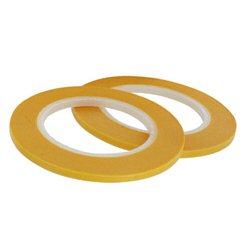
Precision Masking Tape 3mm x 18m - Twin pack
Price: £ 2.50Precision Masking Tape 3mm x 18m - Twin pack Use precision masking tape from...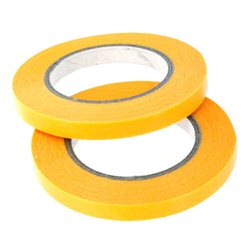
Precision Masking Tape 6mm x 18m - Twin pack
Price: £ 2.99Precision Masking Tape 6mm x 18m - Twin pack
Precision Masking Tape 1mm x 18m - Twin pack
Price: £ 1.99Precision Masking Tape 1mm x 18m - Twin pack
Related posts
-
 Do I need to wash my plastic kit?I personally wash all my plastic kits, I use warm soapy water (Washing up liquid) and a light rub over with a nail...
 - What is Milliput?Milliput is a two-part epoxy putty. There are two different colour rolls in a box when these are mixed together it...
- What modelling tools do I need to get started?Most modellers have an extensive tool kit, a tool for every eventuality. But when first starting a scalpel or a...
- How do I remove parts from the sprue?The short answer is carefully. The best way is with a sprue and plastic cutter but always be mindful of exactly...
- Do I need a cutting mat?It is not essential to have a cutting mat, but it is a good idea. It saves getting in trouble with your significant...