Whether to use the term HO (letter O) or H0 (zero) is not something that causes many modellers a sleepless night. We...

Cart 0 Product Products (empty)
No products
Free shipping! Shipping
£ 0.00 Total
Product successfully added to your shopping cart
Quantity
Total
There are 0 items in your cart. There is 1 item in your cart.
Total products (tax incl.)
Total shipping (tax excl.) Free shipping!
Total (tax incl.)
Search Tips
Tips categories
Latest Tips
-
 Should we say H0 or HO?Read more
 -
 What is the process for building a lock system for a canal on a model layout ?Read more
Building a lock system for a canal on a model layout can be a fascinating and rewarding project. It adds a realistic...
-
 How do I replicate faded paint on military scale models?Read more
One of the key challenges you'll face as a military vehicle modeller is capturing that faded, worn appearance that...
-
 What is a preserved railway?Read more
A preserved railway, also known as a heritage railway, is a railway line that has been restored and maintained for...
-
 What is static grass?Read more
Static grass is a scatter made of nylon fibres, that can be made to stand on end giving the appearance of real grass....

Are ready to run wagons better than kits?
Ready to run kits are good if your modelling skills are limited, simply buy and add to your layout. You also know the finish will be good and they will be square and run correctly.
But many railway modellers prefer to build them and add their own livery with the help of a wide choice of decals. You can have the livery you want and if creating a rake of wagons, different numbers on each of them. You are not reliant on manufacturers releasing what you want.
When building them yourself, there is also a saving to be made, as ready to run wagons are slightly more expensive.
Plus you get the satisfaction of knowing that you made them yourself.
If you are just setting out in the world of railway modelling, I would suggest having a go with a kit as it is very rewarding and will give you an understanding of the component parts that go in to your rolling stock.
Click here to receive the tips weekly in your mailbox. You can unsubscribe at any time.
Related products
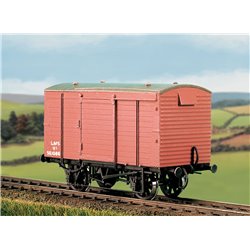
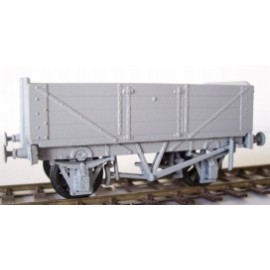
DISC**4 planks Raised End Wagon
Price: £ 9.304 planks Private Owner Fixed End Wagon - 15' 0" "Wheeler & Gregory" type...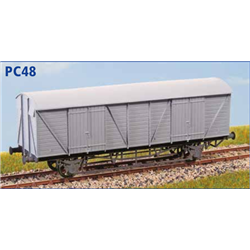
Parkside Dundas PC48 - GWR Mink G Long...
Price: £ 22.90GWR Mink G Long Wheelbase Goods Van - OO unpainted plastic kitComes with...
Related posts
-
 Do I need to wash my plastic kit?I personally wash all my plastic kits, I use warm soapy water (Washing up liquid) and a light rub over with a nail...
 - What is Milliput?Milliput is a two-part epoxy putty. There are two different colour rolls in a box when these are mixed together it...
- What modelling tools do I need to get started?Most modellers have an extensive tool kit, a tool for every eventuality. But when first starting a scalpel or a...
- How do I remove parts from the sprue?The short answer is carefully. The best way is with a sprue and plastic cutter but always be mindful of exactly...
- Do I need a cutting mat?It is not essential to have a cutting mat, but it is a good idea. It saves getting in trouble with your significant...