That would very much depend on what it is you are trying to glue the balsa wood to, if you are gluing it to another...

Cart 0 Product Products (empty)
No products
Free shipping! Shipping
£ 0.00 Total
Product successfully added to your shopping cart
Quantity
Total
There are 0 items in your cart. There is 1 item in your cart.
Total products (tax incl.)
Total shipping (tax excl.) Free shipping!
Total (tax incl.)
Search Tips
Tips categories
Latest Tips
-
 How do I glue balsa wood?Read more
 -
 What is an A1A-A1A wheel arrangement?Read more
In the UK, an A1A-A1A wheel arrangement was used on some early designs of diesel railway locomotives, most notably...
-
 How to fit drivers in locomotivesRead more
Installing a driver or fireman into your locomotive can really bring it to life and add realism. After all, in real...
-
 Do cambers help model trains traverse a bend?Read more
In real life, railway tracks tilt slightly as they negotiate curves. The tilt is known by many names, including a...
-
 Is modelling in N gauge cheaper than OO gauge?Read more
Although N gauge is very popular (and for good reason), it can't be denied that the most popular gauge on the UK...

What are greeblies?
In the world of scale modelling, greeblies (or "greebles") refer to small, intricate details you add to your models to make them look more complex, realistic or futuristic. These can include tiny bits of plastic, wires or random odds and ends that you attach to a surface to suggest mechanical or technological detail.
If you're working on something like a spaceship or a sci-fi vehicle, greeblies are an excellent way to create that "lived-in" look you might recognise from films like Star Wars. For instance, parts from old kits—like leftover gears, vents or tiny panels—can be repurposed as greeblies. They don't necessarily need to serve any real-world function; their purpose is purely aesthetic, adding depth and a sense of realism to your model.
It's a creative process, so don’t be afraid to raid your spares box or even use household items like bits of old electronics or packaging. Greeblies are a brilliant way to take your model from basic to visually striking.
Posted in: Kit building
Click here to receive the tips weekly in your mailbox. You can unsubscribe at any time.
Related products
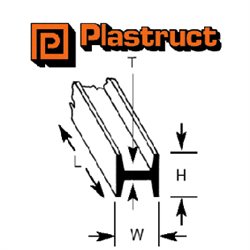
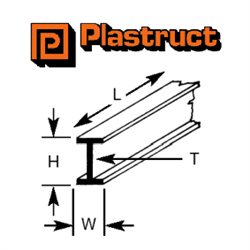
5/8″ Styrene I Beam (15.9 x 7.9 x 375mm)
Price: £ 3.255/8″ Styrene I Beam (15.9 x 7.9 x 375mm)Use for horizontal or diagonal...
Related posts
-
 Do I need to wash my plastic kit?I personally wash all my plastic kits, I use warm soapy water (Washing up liquid) and a light rub over with a nail...
 - What is Milliput?Milliput is a two-part epoxy putty. There are two different colour rolls in a box when these are mixed together it...
- What modelling tools do I need to get started?Most modellers have an extensive tool kit, a tool for every eventuality. But when first starting a scalpel or a...
- How do I remove parts from the sprue?The short answer is carefully. The best way is with a sprue and plastic cutter but always be mindful of exactly...
- Do I need a cutting mat?It is not essential to have a cutting mat, but it is a good idea. It saves getting in trouble with your significant...