SPAD stands for Signal Passed At Danger. It is a term used in the railway industry to describe a situation where a...

Cart 0 Product Products (empty)
No products
Free shipping! Shipping
£ 0.00 Total
Product successfully added to your shopping cart
Quantity
Total
There are 0 items in your cart. There is 1 item in your cart.
Total products (tax incl.)
Total shipping (tax excl.) Free shipping!
Total (tax incl.)
Search Tips
Tips categories
Latest Tips
-
 In railways, what does the term 'SPAD' mean and could I incorporate this into my layout ?Read more
 -
 How can I create fuel drums for a model or layout?Read more
Fuel drums are a great feature to add to a layout or diorama that can help add realistic scene elements. One way to...
-
 In model railroad, what are track painters?Read more
Track painters (produced by Woodland Scenics) are pen-like tools for applying various paint effects to the rails and...
-
 What is acetate?Read more
Acetate is a term used in modelling to describe many types of plastic film or sheets and is so called because it's...
-
 What is the minimum space required to install a OO gauge incline?Read more
For most modellers, installing an incline can be challenging because they take up so much space, and space is...

Should I pin or glue track on my layout?
It is very tempting to use pins or nails to stick the track down but this may not be the best approach.
Pins are difficult to fix in place without distorting the sleepers and points. They are also near impossible to hide, meaning your layout does not look like the real thing.
Pins can also lift up over time and this can cause damage to your rolling stock: you definitely do not want a pin to end up in the motor of one of your engines!
Pins are useful to test a layout while you are not sure what design to follow.
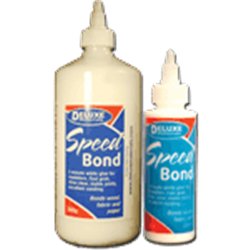
However, once decided, remove the pins and glue the track down. If you do not like the idea of glue, you can use double sided tape.
Click here to receive the tips weekly in your mailbox. You can unsubscribe at any time.
Related products
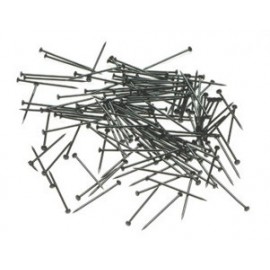
Setrack Fixing Nails
Price: £ 4.40Setrack Fixing Nails 25g pack of fixing nails for layouts. Can be used to...
Related posts
-
 Do I need to paint my base boards?I would recommend painting your base board for two reasons: The first being it will seal the base board and prevent...
 - Do I need a respirator?If you are using an aerosol spray paint you should always use one. Always read the manufacturer’s...
- How to remove super glue (cyanoacrylate)?Cyanoacrylate is best known as super glue. The best way to remove it is with acetone or an acetone-based product...
- How do I apply static grass?Static grass is best applied using a static grass applicator. There are several on the market and they can apply...
- What is a Diorama?A diorama is three-dimensional scene creating a moment in time, this could be a historical event or a fictional one,...