There are many types of power clip available to attach power cables to model railway track, and in the main, they all...

Cart 0 Product Products (empty)
No products
Free shipping! Shipping
£ 0.00 Total
Product successfully added to your shopping cart
Quantity
Total
There are 0 items in your cart. There is 1 item in your cart.
Total products (tax incl.)
Total shipping (tax excl.) Free shipping!
Total (tax incl.)
Search Tips
Tips categories
Latest Tips
-
 Can I use a digital power clip with an analogue layout?Read more
 -
 Why were the railways grouped?Read more
By the early 20th century, the railways had grown to such an extent that competition was fierce and the market was...
-
 Should I use a girder bridge for a river crossing?Read more
Girder bridges are good choices for river crossings for a number of reasons. Firstly, they offer great strength and...
-
 What type of equipment is used to recover a derailed train ?Read more
When a train derails, it can be a challenging and complex task to recover it and get it back on track. Specialized...
-
 What are the tips for cleaning and preparing white metal parts for assembly ?Read more
White metal is a popular material used in scale modelling, particularly for model railway enthusiasts. It is a type...

How do I remove parts from the sprues of my plastic kit?
Removing parts from sprues in a plastic model kit is a crucial step that requires care and precision to avoid damaging the parts. Here are the steps you can follow to do this effectively:
Tools You'll Need
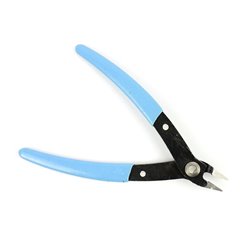
- Sprue Cutters or Flush Cutters: These are specialised tools designed for cutting plastic parts from sprues cleanly.
- Hobby Knife (e.g. Swann Morton knife): For trimming any remaining sprue nubs and for finer cuts.
- Tweezers: Useful for handling small parts.
- Sandpaper or Needle Files: For smoothing down any rough edges left after cutting.
Steps to Remove Parts from Sprues
Preparation:
- Ensure you have a clean, well-lit workspace.
- Organise your tools and the sprues so that everything is within easy reach.
Identify the Parts:
- Carefully study the instruction manual to identify the parts you need to remove.
- Double-check the part numbers and locations on the sprue to avoid mistakes.
Cutting the Parts:
- Use the sprue cutters to cut the part from the sprue. Place the flat side of the cutter against the part and cut as close to the part as possible without cutting into it.
- Cut the sprue gate (the connection between the part and the sprue) rather than trying to twist or snap the part off, which can damage the part.
Trimming Excess Plastic:
- Once the part is free, use a hobby knife to carefully trim any excess plastic from the sprue gate that remains on the part.
- Make small, controlled cuts to avoid gouging the part.
Smoothing the Edges:
- Use fine-grit sandpaper or a needle file to smooth any rough edges or nubs left from cutting.
- Sand gently to avoid altering the shape of the part.
Cleaning:
- After trimming and sanding, clean the part to remove any plastic dust. A soft brush or a damp cloth can be useful for this.
Additional Tips
- Work Slowly and Carefully: Rushing can lead to mistakes and damaged parts.
- Use Proper Lighting: Good lighting helps you see where you’re cutting and trimming more clearly.
- Practise on Unimportant Parts: If you’re new to model building, practise on less important parts first to get a feel for the tools and techniques.
By following these steps and using the right tools, you can effectively remove parts from sprues without damaging your plastic kit.
Posted in: Kit building
Click here to receive the tips weekly in your mailbox. You can unsubscribe at any time.
Related product
Related posts
-
 Do I need to wash my plastic kit?I personally wash all my plastic kits, I use warm soapy water (Washing up liquid) and a light rub over with a nail...
 - What is Milliput?Milliput is a two-part epoxy putty. There are two different colour rolls in a box when these are mixed together it...
- What modelling tools do I need to get started?Most modellers have an extensive tool kit, a tool for every eventuality. But when first starting a scalpel or a...
- How do I remove parts from the sprue?The short answer is carefully. The best way is with a sprue and plastic cutter but always be mindful of exactly...
- Do I need a cutting mat?It is not essential to have a cutting mat, but it is a good idea. It saves getting in trouble with your significant...