Bogie Sulphate Wagons were, at the time, famed for being the largest open wagons of their type, but their demise was...

Cart 0 Product Products (empty)
No products
Free shipping! Shipping
£ 0.00 Total
Product successfully added to your shopping cart
Quantity
Total
There are 0 items in your cart. There is 1 item in your cart.
Total products (tax incl.)
Total shipping (tax excl.) Free shipping!
Total (tax incl.)
Search Tips
Tips categories
Latest Tips
-
 What is a bogie sulphate wagon?Read more
 -
 What is the best way to glue a cardboard building kit?Read more
The best way to glue a cardboard kit like Metcalfe or Superquick is to read and follow the instructions that are...
-
 How do I get started with weathering a plane?Read more
Weathering a plane is a fantastic way to add realism and character to your aircraft. It involves replicating the...
-
 What is the HOm scale?Read more
The HOm scale is a popular narrow-gauge modelling scale used by enthusiasts to represent railways that are smaller...
-
 What kind of solder should I use on white metal kits?Read more
If you are soldering a white-metal kit together, you will need to use a lower temperature setting on your soldering...

What is model railway track plan?
A track plan is essentially the blueprint or schematic that guides you in constructing your miniature railway system. It serves as the foundation for your entire model railway layout, determining the arrangement of the various track sections, including the main lines, sidings, stations, tunnels, bridges and other scenic elements.
When creating your track plan, you'll want to consider factors such as the scale (for example OO, N or TT gauge) you're working with, the available space you have, the level of complexity you desire, and the intended theme or era you wish to recreate. Some modellers prefer to model specific real-world locations, while others opt for more whimsical or fictional settings.
A well-designed track plan not only ensures smooth and functional railway operations but also contributes to the overall aesthetic appeal and realism of your model railway setup. It allows you to carefully plan the placement of various elements, such as buildings, vegetation, and other scenic details, to create a cohesive and visually appealing display.
You can draft your track plan using specialized software or by hand, and it's often helpful to include detailed measurements, elevations, and notes to aid in the construction process. Experienced modellers in the UK often share their track plans with others in the hobby, either through magazines, online forums, or club meetings, to inspire and guide fellow enthusiasts in their own model railway projects.
So, whether you're a seasoned modeller or just starting out, take the time to plan your track layout carefully. A well-thought-out track plan can make all the difference in creating a truly captivating and memorable model railway display.
Posted in: Design and Planning
Click here to receive the tips weekly in your mailbox. You can unsubscribe at any time.
Related products
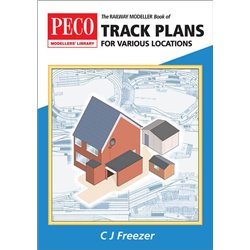
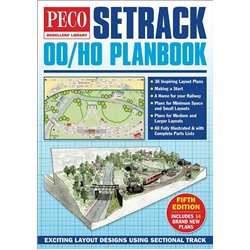
OO/HO Setrack Planbook 5th Edition
Price: £ 3.75This book is the new edition of a PECO bestseller and includes lots of new...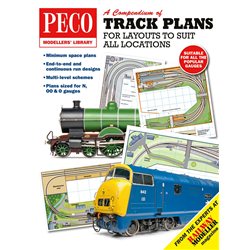
Track Plans For Layouts To Suit All Locations
Price: £ 3.95Track Plans For Layouts To Suit All Locations. This 62 page perfect-bound...
Related posts
-
 Do I need to paint my base boards?I would recommend painting your base board for two reasons: The first being it will seal the base board and prevent...
 - How do I apply static grass?Static grass is best applied using a static grass applicator. There are several on the market and they can apply...
- What is a Diorama?A diorama is three-dimensional scene creating a moment in time, this could be a historical event or a fictional one,...
- What is the best wood for baseboards?The most common wood for baseboards is probably chipboard as this is relatively inexpensive. Plywood is another...
- How to make hills?You can make hills in a variety of ways. The tried and tested way is with chicken wire and papier mache. This is a...