There are a couple of reasons why railway signals are oriented upside down compared to road traffic lights:...

Cart 0 Product Products (empty)
No products
Free shipping! Shipping
£ 0.00 Total
Product successfully added to your shopping cart
Quantity
Total
There are 0 items in your cart. There is 1 item in your cart.
Total products (tax incl.)
Total shipping (tax excl.) Free shipping!
Total (tax incl.)
Search Tips
Tips categories
Latest Tips
-
 Why are railway signals upside down compared to road traffic lights?Read more
 -
 What can I do with yellowing decals?Read more
Yellowing of waterslide decal sheets is periodically a problem for modellers, especially those who enjoy collecting...
-
 Which type of turnout motor is best for my model railway?Read more
If you are thinking about installing turnout motors (also referred to as point motors) on your layout, you may well...
-
 What is a tree armature?Read more
In modelling, a tree armature is the plastic skeleton of a tree (the trunk and branches) with no foliage attached....
-
 Is finescale track better than standard track?Read more
When evaluating whether finescale or standard track is the better option for your model railway pursuits, there are...

Can I mix different media-based building kits, such as card and plastic on a layout?
Yes, it is possible mix different media-based building kits on a layout. In fact, it can add a lot of visual interest and variety to a model railway or scale modelling project. Mixing different materials like card and plastic allows a Modeller to create a unique and realistic look for their buildings and structures.
Card kits are often made from high-quality cardstock or paper, and they provide a cost-effective option for creating buildings with intricate details. These kits usually come with pre-printed textures and designs, which can be cut, folded and assembled to create realistic-looking structures. Card kits are available in various scales, including OO/HO and N gauges.
On the other hand, plastic kits are made from injection-moulded plastic and offer a wider range of options in terms of design and detailing. Plastic kits often come with separate parts that need to be glued together and they can be painted and weathered to add even more realism to the layout. Plastic kits are also available in various scales, including OO/HO and N gauges.
When mixing different media-based building kits, it is important to consider the scale and compatibility of the kits. Make sure that the kits to be used are to the same scale, so that the buildings and structures appear proportional to each other.
To blend the different materials seamlessly, it is possible to use techniques such as weathering, painting, and adding additional details. Weathering can help to unify the different textures and finishes of the card and plastic components, making them look more cohesive. Painting the kits with similar colours and adding details like signage, weathered paintwork and realistic textures can also help to create a harmonious look.
In conclusion, it may not be possible for a modeller to source all the buildings and equipment they require in one particular medium. Ultimately, mixing different media-based building kits allows a modeller to tap into the strengths of each material and create a visually appealing and unique layout. Mixing different combinations can create a distinctive and immersive environment for an observer and can really help bring the project to life!
Posted in: Kit building
Click here to receive the tips weekly in your mailbox. You can unsubscribe at any time.
Related products
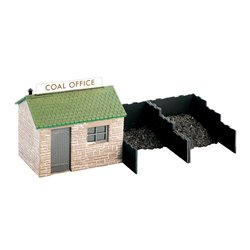
Coal yard hut
Price: £ 10.75Coal yard hutMoulded plastic parts that require gluing together. Painting and...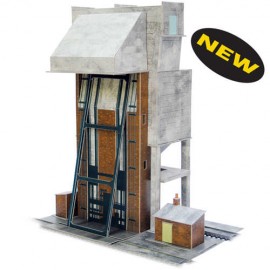
Coaling Tower H:300mm area: 250x165mm
Price: £ 19.95Coaling Tower Area: 250 x 165mm Height: 300mm for the tower (142 x 152mm) /...
Related posts
-
 Do I need to wash my plastic kit?I personally wash all my plastic kits, I use warm soapy water (Washing up liquid) and a light rub over with a nail...
 - What is Milliput?Milliput is a two-part epoxy putty. There are two different colour rolls in a box when these are mixed together it...
- What modelling tools do I need to get started?Most modellers have an extensive tool kit, a tool for every eventuality. But when first starting a scalpel or a...
- How do I remove parts from the sprue?The short answer is carefully. The best way is with a sprue and plastic cutter but always be mindful of exactly...
- Do I need a cutting mat?It is not essential to have a cutting mat, but it is a good idea. It saves getting in trouble with your significant...