That would very much depend on what it is you are trying to glue the balsa wood to, if you are gluing it to another...

Cart 0 Product Products (empty)
No products
Free shipping! Shipping
£ 0.00 Total
Product successfully added to your shopping cart
Quantity
Total
There are 0 items in your cart. There is 1 item in your cart.
Total products (tax incl.)
Total shipping (tax excl.) Free shipping!
Total (tax incl.)
Search Tips
Tips categories
Latest Tips
-
 How do I glue balsa wood?Read more
 -
 What is an A1A-A1A wheel arrangement?Read more
In the UK, an A1A-A1A wheel arrangement was used on some early designs of diesel railway locomotives, most notably...
-
 How to fit drivers in locomotivesRead more
Installing a driver or fireman into your locomotive can really bring it to life and add realism. After all, in real...
-
 Do cambers help model trains traverse a bend?Read more
In real life, railway tracks tilt slightly as they negotiate curves. The tilt is known by many names, including a...
-
 Is modelling in N gauge cheaper than OO gauge?Read more
Although N gauge is very popular (and for good reason), it can't be denied that the most popular gauge on the UK...

How can I run two engines in opposite directions?
If you are new to modelling or considering your first layout, you may be wondering if it is possible to run locomotives either independently or in opposite directions when placed on the same track. And the answer is yes, but there's a but!
Traditional model railway layouts (and most starter sets) operate by a controller sending power through the metal rails to a locomotive. The more power the controller sends, the faster the locomotive goes. And if you place a second locomotive on the same track, it too will react in the same way resulting in both models moving at roughly the same speed, in the same direction, and at the same time. A controller that works in this way is called an analogue controller (DC operation).
A DCC (Digital Command Control) controller works differently. This type of controller will energise the whole of your layout with full power at all times. DCC equipped models will only use that power when instructed to do so by the controller. A DCC controller can send messages to individual locomotives and therefore move them around independently and even in opposite directions.
If you desire independent control of your locomotives, DCC is the way to go. If you do decide to use DCC, you will be able to do much more than simply controlling your locomotives one at a time. Some DCC equipped models can have sound fitted and can be programmed to behave prototypically when speeding up or slowing down. DCC is certainly an entertaining feature to have, however, it is also more expensive and a little more complicated to install, so make sure you do your homework first to see if it's for you.
Posted in: Power and control
Click here to receive the tips weekly in your mailbox. You can unsubscribe at any time.
Related product
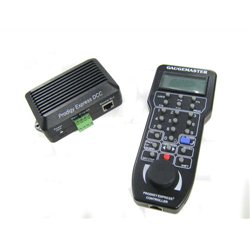
Prodigy Express Starter Package
Price: £ 315.00DCC controller - Prodigy Express Package Comprising of a Base Station,...
Related posts
-
 Can a "DCC ready" train be used on analogue?Yes, you can use a DCC ready train on your analogue layout. DCC ready just means that the train has been factory...
 - Is it difficult to fit a DCC decoder in to a DCC ready engine?In theory, it should be easy as the whole idea of being DCC Ready is to simplify the process. The first time I did...
- What is 7/0.2 wire?7/02 wire is a wire made of 7 strands of 0.2mm wire. Stranded wire has the advantage of being flexible while solid...
- Is an N Gauge controller compatible with OO Gauge?Yes, an N Gauge controller is compatible with OO gauge trains. You may have to change the power clip to the track...
- Is stranded wire better than solid wire?In my experience, stranded wire is preferable over solid wire. Stranded wire is more flexible than solid core wire,...